
Sharing the Longevity Game with the world.
From a TEDx stage in Warsaw to the scientific summits in Copenhagen, Dublin, Singapore, Shanghai and Hong Kong. 9 stages, 9 cities, one argument: longevity is a game, and almost nobody has been told the rules.
The whole argument in a few minutes.
This is my conference reel, where I explain the framework of the Longevity Game and the Longevity Map.
Longevity is the game. Every day we make choices that either lengthen or shorten our life. We only have to learn the rules, become a player and start winning — then help everybody still watching from the sidelines become a player too.
9 rooms, and what I said in each one.
The question I went back to Dublin to ask was how this field attracts ten times, a hundred times more funding than it has now. My answer is that it will not come from better science. It will come from communication.
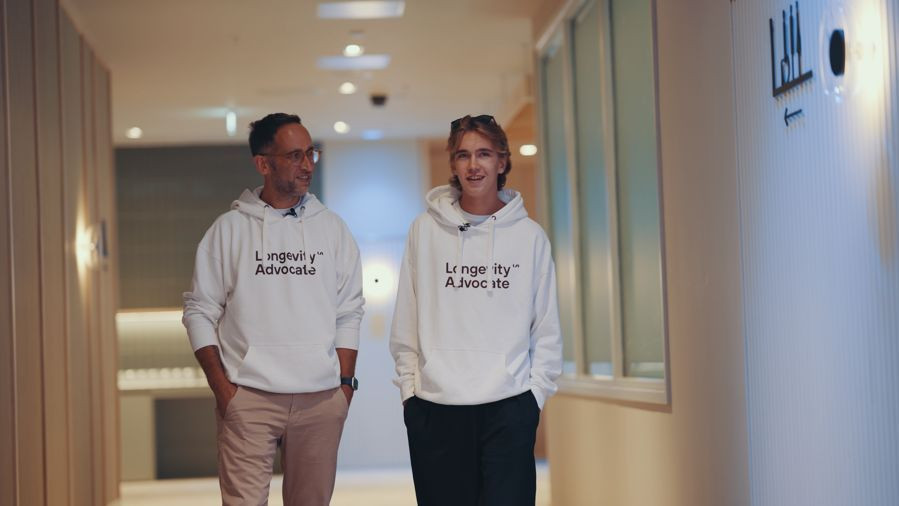
Three years earlier, in that same room, my son and I were newbies who knew nobody. We had come to interview people, and we left having met the trailblazers of the field — and then kept meeting them all over the world for the rest of that year. Going back was the point: not to learn from the room this time, but to argue with it.
The argument starts with a diagnosis, and it is uncomfortable. In public, longevity is represented by biohackers measuring themselves and injecting things they do not understand, and by scientists nobody outside the field can follow. So most people reach one of three conclusions: it is for the rich, it is for the obsessive who would give up joy for a regimen, or they simply have no idea what the word means. Under that sits something older — thousands of years of programming that says decline is the deal — and under that, the thing nobody says out loud: a lot of people do not love themselves enough to want more time. And there is no wonder drug to point at yet.
So: no product, no service and no idea has ever grown without proper communication, and it certainly does not attract another ten billion dollars. If hundreds of millions of people fall in love with this — through stories, through emotion, through seeing scientists as ordinary heroes with a mission rather than as people in coats — they change their own lives first. Then the culture shifts. Then they start demanding it of businesses, governments and institutions, and the people inside those institutions are part of the masses too. Then more people join the field, and the village grows. That is the pull, and that is where the ten times comes from.
The field needs the whole village to grow. Do not be a bystander. I finished by playing the teaser.
“No product, no service and no idea grows without proper communication — and it certainly does not attract another ten billion dollars.”his own outline for the talk · Dublin, June 2026
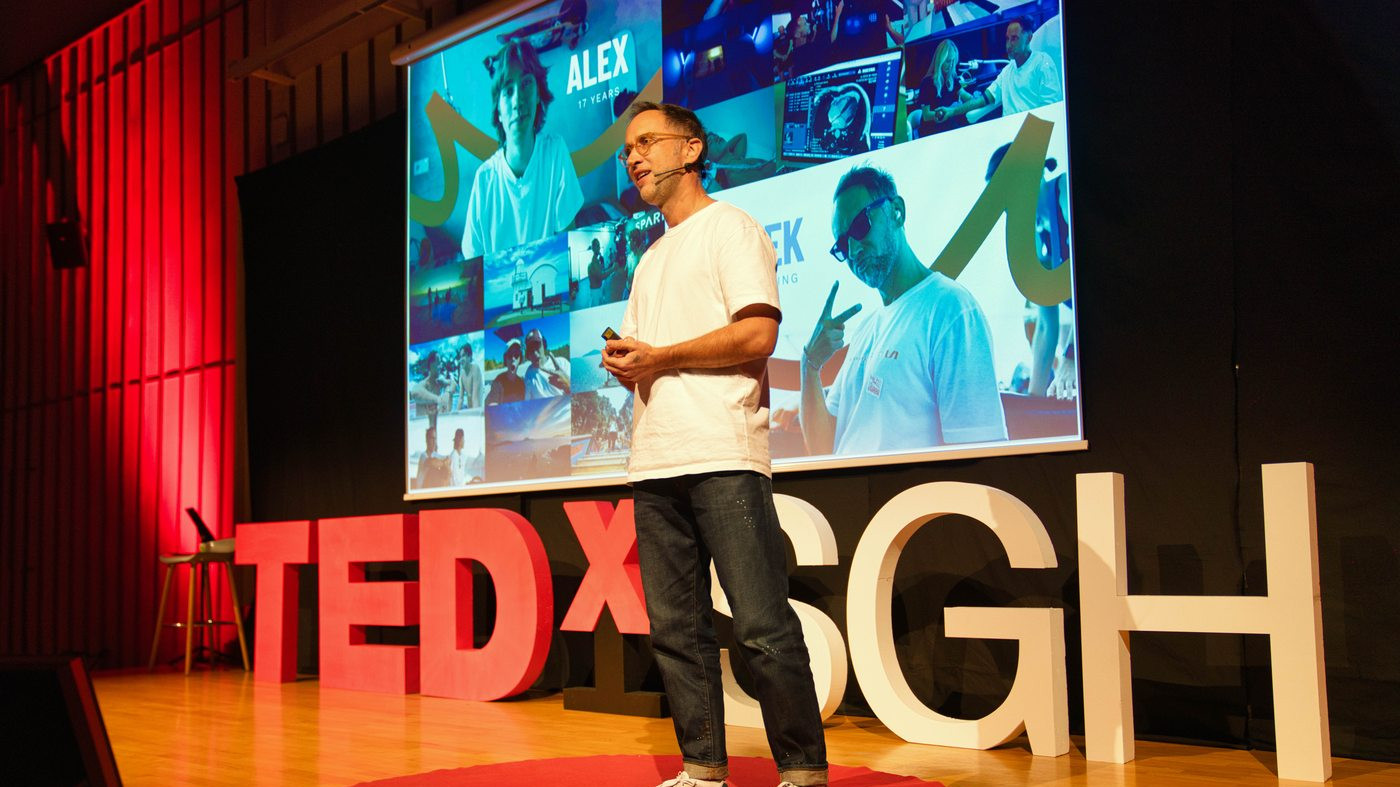
The hardest one, and the one that mattered most. My own city, my own university, and the first time I had ever spoken about longevity in Polish — I do it in English everywhere else, and I was nervous. That edition of TEDx was about telling your own story, so I told mine: a difficult childhood and a teenager who barely spoke; the teacher, Janusz Mirczewski, who taught me to breathe and to play with language and who is the reason I stand on stages at all; being successful and sad at the same time; and what changed it.
Then the quest with my son, and why I intend to be alongside him for another hundred years. In the room were the friends who had walked all of it with me, and my old schoolmates.
“Live beyond what society, your family and other people tell you that you are and what you have to do. Be who you really are. Do what you really want to do.”the close of the talk, Warsaw
“If your blood is not singing at the thought of being who you are and doing what you do, then your life is wasted.”Srikumar Rao · from our interview in New York, and on the TEDx stage
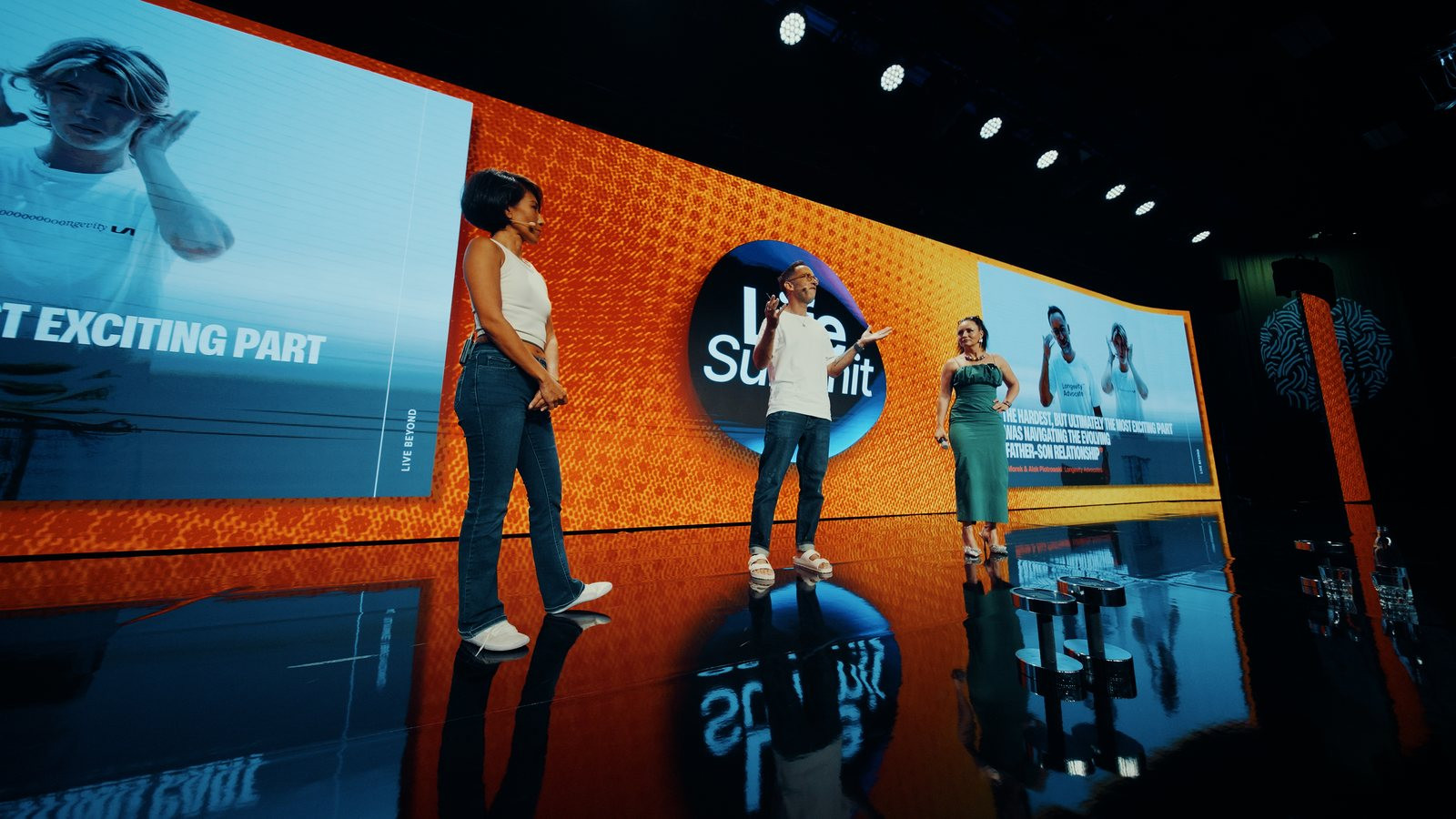
I did not want to give another talk, so I asked the organisers if we could make a show instead — and I did not want it to be about me, because Live Beyond is not supposed to be about me. So there were four of us on the main stage and I ran it as MC: Olivia Lesslar, the biohacker Valerie Orsoni, and Raiany Romanni live from Boston on the big screen. We walked the audience through the Longevity Map level by level, and the whole room changed colour as we went — orange for the basics, yellow for the upgrades, not the slides, the room.
Bars and weights came out for the movement level. And where the four of us disagreed we let it show, because the point is that nobody else’s longevity journey is yours.
“Longevity is not a subject for people over 40. It starts when you are young, and that is when the journey should begin.”the argument of the show, Berlin
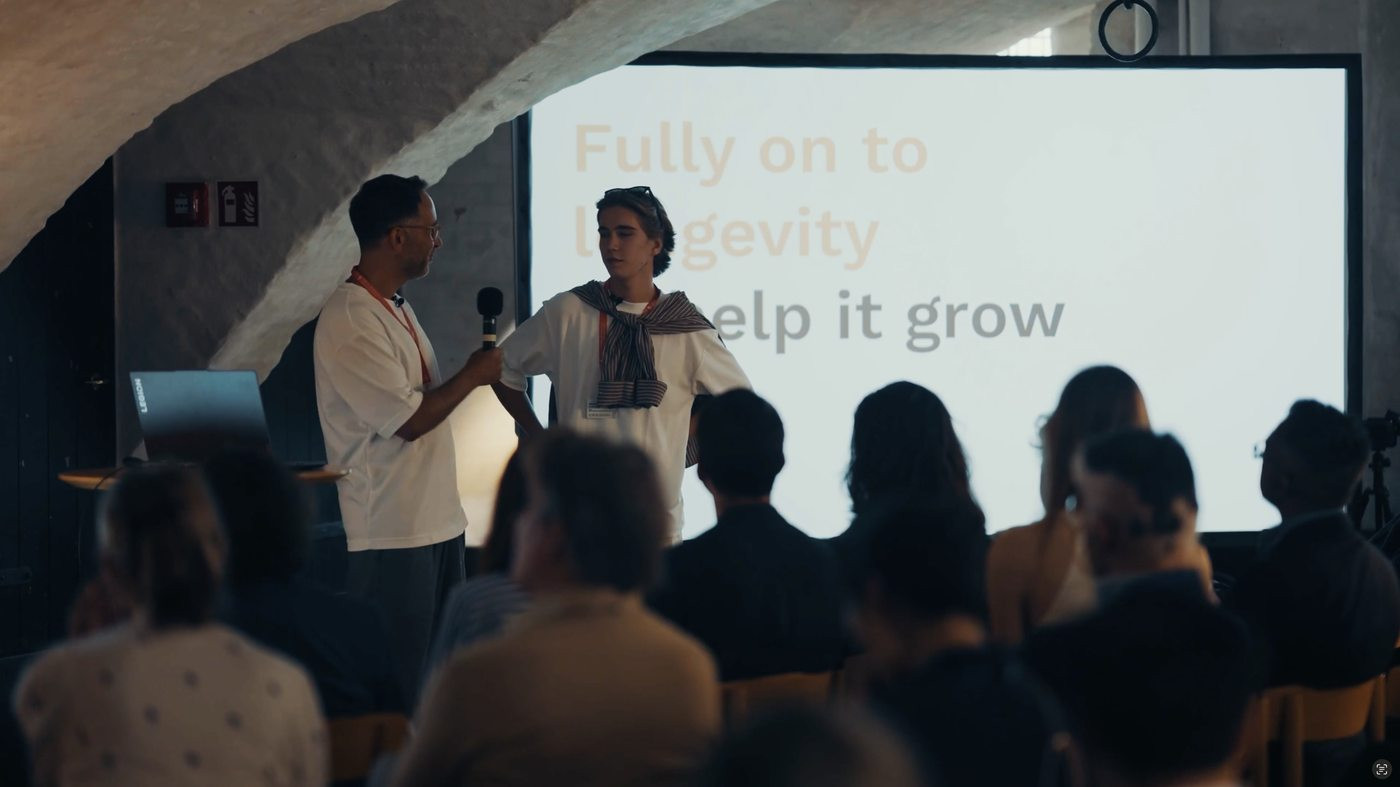
Aging Research and Drug Discovery is the scientific heart of the field, and for us it was the jewel in the crown — a Copenhagen hall full of the people whose papers everybody else quotes. Evelyne Bischof invited us to speak to the Healthy Longevity Medicine Society session: a small room, clinicians rather than a festival crowd.
It was also the last conference of the quest. Longevity Summit Dublin had been the first conference my son and I ever walked into; this was the last, and the room held Max Unfried, Andrea Maier, Steve Horvath, Christine Yuan Huang and Wei-Wu He, the chief executive of Human Longevity in San Diego. Alek took the whole talk here for the first time — not a section of it, all of it — on the Longevity Map we had built on the road and the gaps still left in it.
He went from Copenhagen straight to Amsterdam, to the university he had chosen for himself.
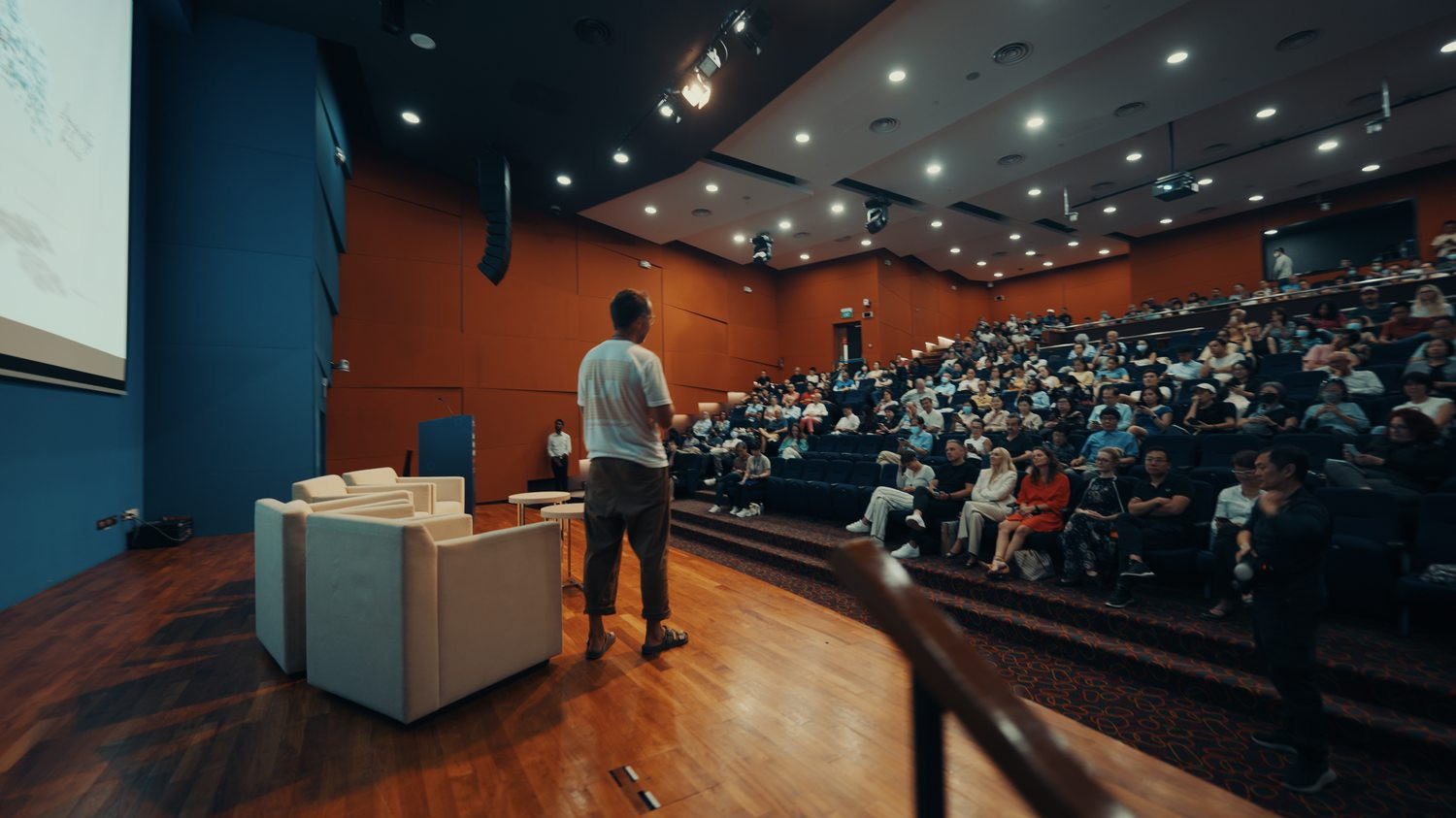
We were in New Zealand, about to carry on to Fiji and the Cook Islands, when Andrea Maier called: we are running this conference, come and speak, and bring your son. So we flew from New Zealand through Perth to Singapore instead. Andrea, Hans Meij and the whole Singapore community hosted us as though we were family, and took us into Chi Longevity, Andrea’s clinic, and into SparkD, a brain and body gym — one of the moments that changed how I think about prevention.
I had told her when I arrived that if anything went wrong she should just ask. She rang at ten at night: a speaker had arrived with COVID, could I take his slot in the morning — half an hour on stage, half an hour of interview, and questions — and could I also speak about how to build a strong brand in longevity, out of my twenty years of doing it. So I ended up on that stage three times.
In the interview Hans asked me how on earth we had thought of doing this at all, and Alek sat beside me for it. And on the open day Alek was up there with me for a third of the talk, and spoke for six or seven minutes straight, from his heart, about why we are doing this and why it has to reach everybody. He had turned eighteen on the road. My heart was growing. I came back two years later, at Andrea’s invitation, for one of the panels.
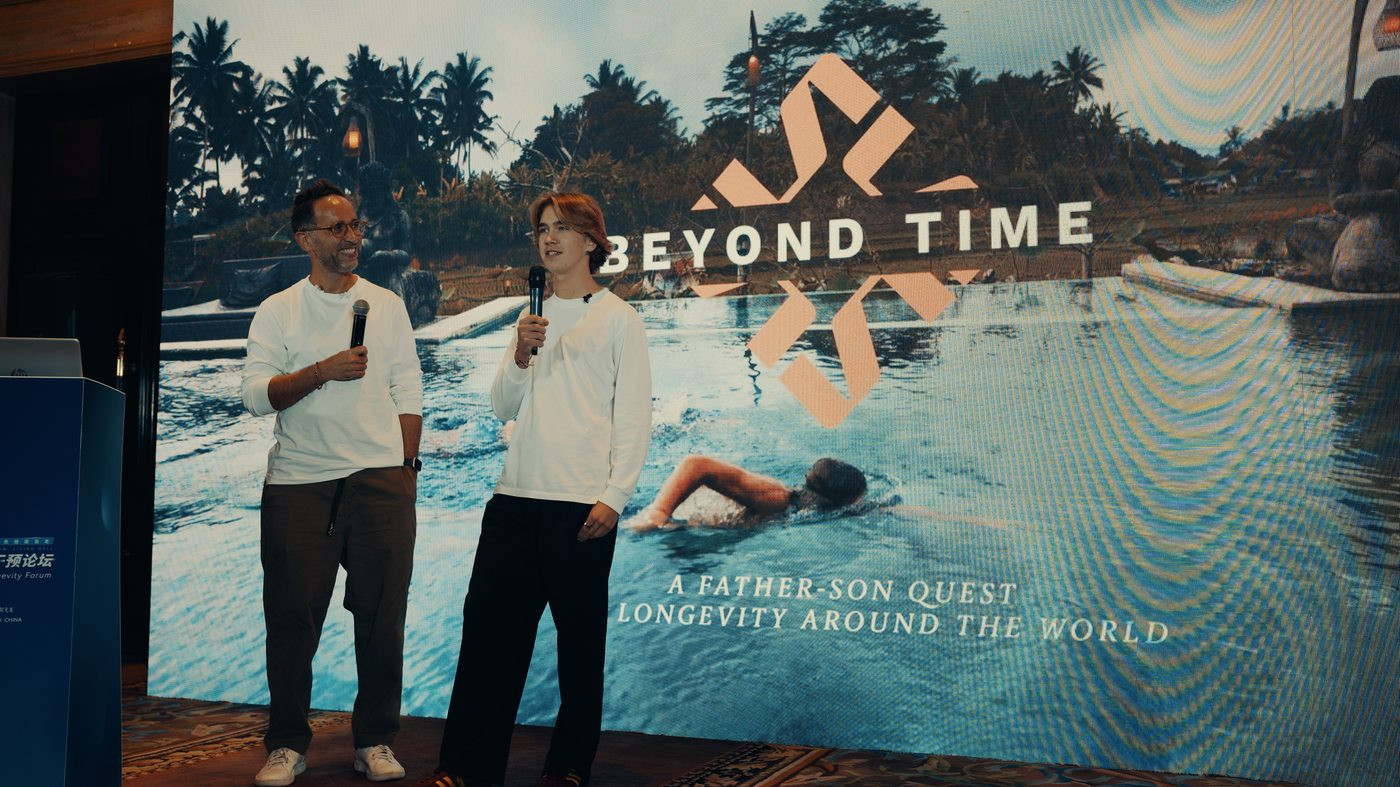
Our first stage. Dublin had been the first conference we attended, but we went there to interview people; Shanghai is where we first spoke. We were in Okinawa when Tina Woods told us she was speaking at TimePie and that we should come too, and she introduced us to the organisers, who invited us both. So we told a room in Shanghai where we had got to: the quest, the mission, and what we had already learned from the scientists and doctors on the way. China is a special country for this — full of biohackers and optimisers, and the questions did not stop.
Alek came up on stage for a few minutes to say what the journey meant to him, then went back to filming me from the floor. And when I had finished, the room moved across to him and started asking him instead — what he had learned, what it is like to travel the world with your father for a year. He was seventeen. I could see his heart growing.
We saw the future at Insilico’s AI robotic lab, sat down again with Evelyne Bischof at her clinic, and she invited us to dinner with her dearest friends, which felt like being taken into a family. It felt that way with Liz Parrish too, walking around Shanghai — and six months later we were living at her house in Seattle for a week. I met Avi Roy at this conference, and he is a good friend now.
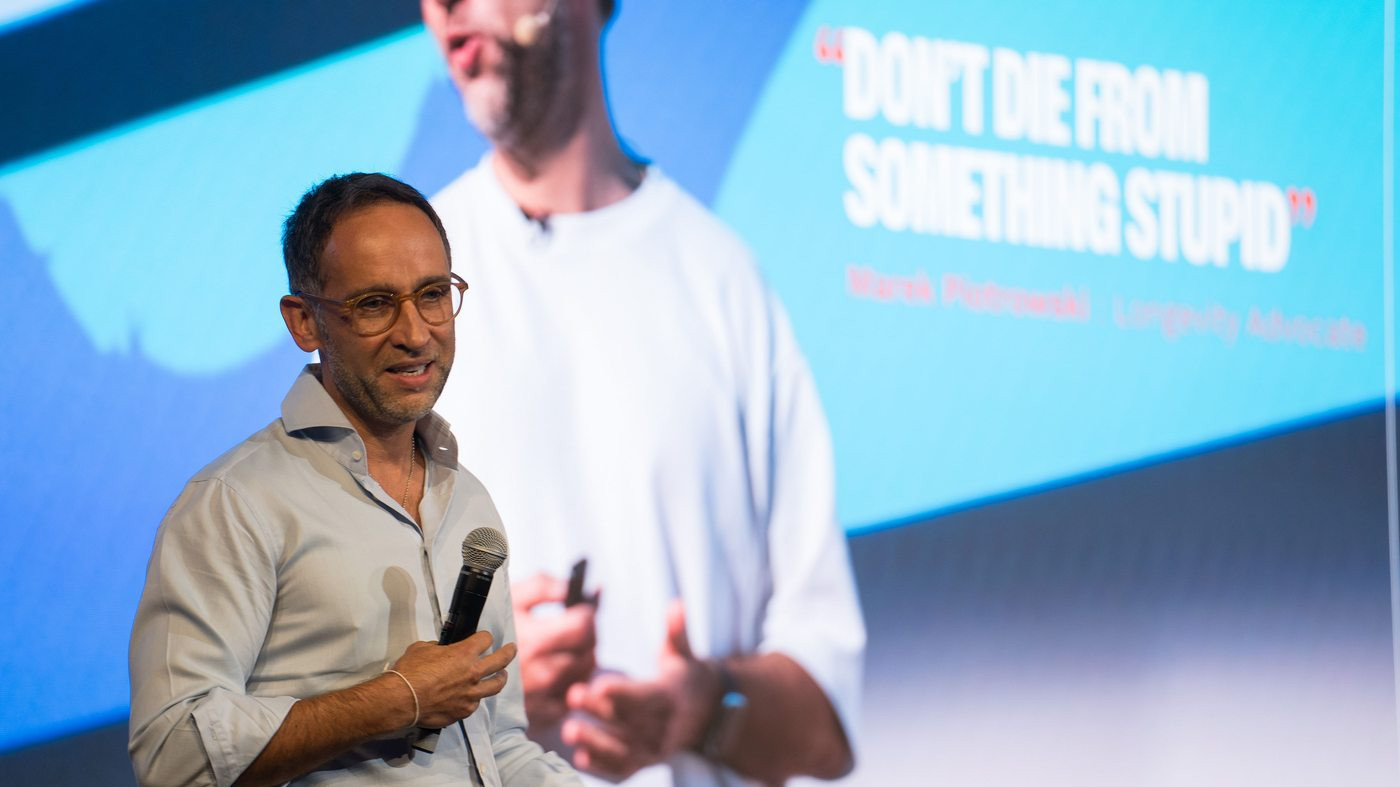
An investor room, and mostly an Italian one, because Quadrivio is one of the largest funds in Italy and has a fund of its own dedicated to the silver economy. I was one of the main speakers, on the quest, the Longevity Map and what we learned. The Italian Consul in London was there as one of the hosts, and could not have been more welcoming — and nor could anybody else.
Maria Pompilio, who runs Quadrivio’s marketing and communication, made the whole thing what it was: the room had a real atmosphere in it.
They loved the talk and they loved the teaser, with my son in it. And when the session broke, very nearly everybody in a room of four hundred came over: to thank me, to congratulate us on the quest, and to say how much they would love to do the same thing with their own children. That is the reaction I want from every room.
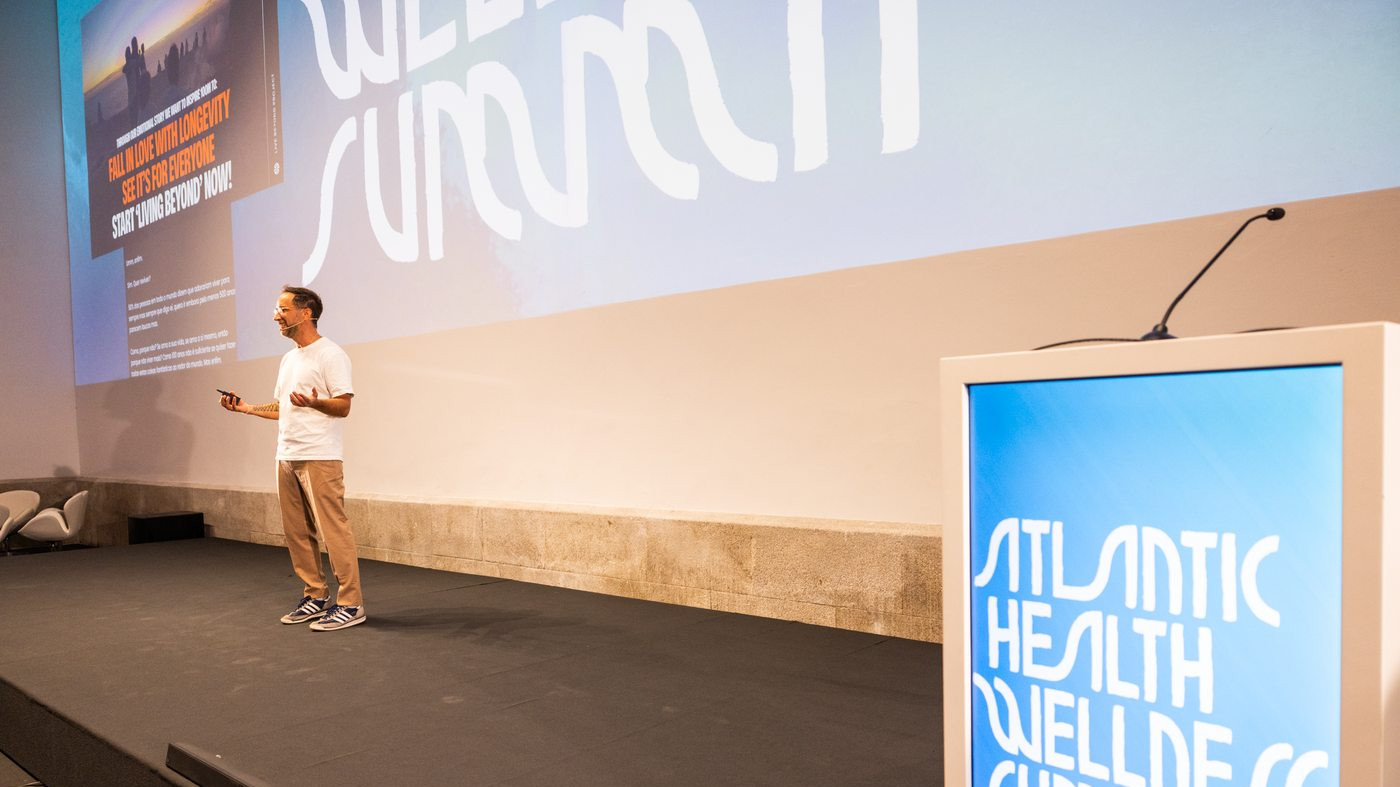
Twice, and the second time from the other side of the table. In November 2024, just after the quest, I brought the quest and the Map. By October 2025 I was an adviser to the summit, so I invited speakers too — Olivia Lesslar came from the other side of the world and Vittorio Sebastiano came from California, and the room loved them. It is a medical and wellness summit, so this was the pharmaceutical crowd: people whose whole industry is prevention.
What surprised me was how many of them had never had proper diagnostics done on themselves. So I said what I always say. Dying of something preventable, or from choices you knew were bad for you, is a stupid way to go. Check what is under your hood, the way you would with a car — your body, your heart and your mind, properly measured at a longevity clinic, because you never know what is inside.
Prevention is the king. And Porto is a beautiful city, with beautiful food and beautiful people.
“Prevention is the king.”Porto, to a room of people who work in prevention for a living
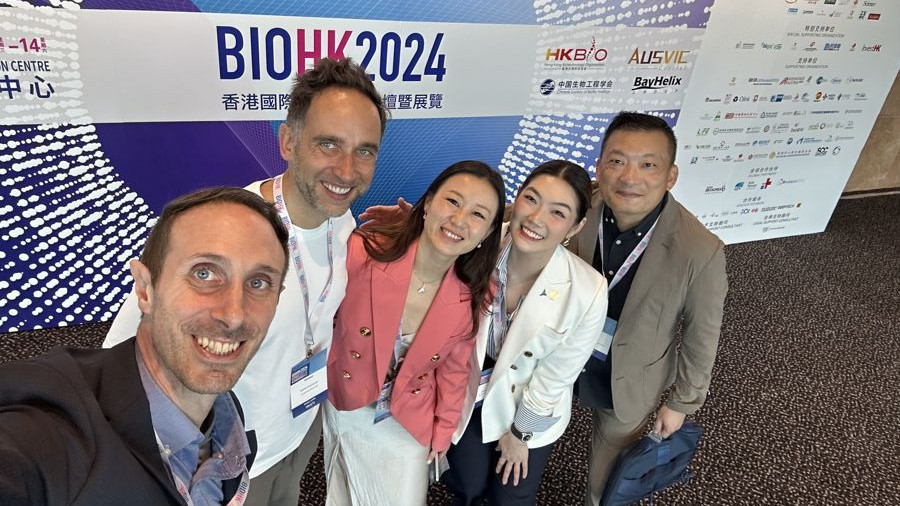
After the quest. Alek was in Amsterdam by then, studying, and Christine Yuan Huang — who hosted the whole thing — wrote and asked me to come and speak. I said yes for her, and for the friends who would be in the room: Boris Djordjevic over from London, and Vincenzo Sorrentino. And because I love Hong Kong, the city and the nature both — biotech, capital, and a place that starts its mornings with tai chi in the park. I brought the quest, the story and the Longevity Map to a Hong Kong audience.
I also met Alireza Haghighi here, a geneticist at Harvard, and we recorded an interview with him later that matters a great deal to me. That is how the field grows: by connecting with people. And I did not go alone — Kamil Rydzewski came with me. He is a filmmaker and a great friend, and he was alongside us for about a quarter of the quest around the world, coming and going.
Six talks, and one idea underneath them.
The Longevity Game
One picture of the whole field — the Map — and the two rules that turn longevity from a subject into a game an audience can start playing on the way home.
45–60 min keynote · general and corporate audiences
A father and son around the world
39 countries and states, 100 experts and one teenager. What a year on the road taught us about lifespan, and what it taught us about each other.
30–45 min keynote · opening or closing session
Two horizons of extra life
What we can add with what science already knows, and what the science ahead could add on top of it — told without hype and without the sales pitch.
30–45 min · scientific and investor audiences
It takes a village
Why longevity needs communicators, CEOs, investors and logisticians as much as it needs scientists — and how anyone in the room becomes a longevity advocate.
20–30 min · conference and community audiences
How we help the field grow
The talk I gave back in Dublin, to the field itself. We co-create a new culture with longevity, health and joy built into it, we make the masses fall in love with longevity — and the money, the attention and the support follow. And we can start now, together.
30–45 min · scientific, investor and industry audiences
What it means to live beyond
The TEDx talk. What living beyond actually means, how it connects to longevity, what really matters in the end — and how anybody can start living beyond and inspire the people around them to do the same.
18–30 min · general audiences, in English or Polish
Get the Map. It is free, and it is the whole field on one page.
The Longevity Map will guide you to a longer, healthier and more fulfilling life. It gives you a helicopter view on all branches of the longevity field.