
Raising a Longevity Generation
Why I take my teenage son to longevity clinics, and what a year on the road with him taught me that no interview could.
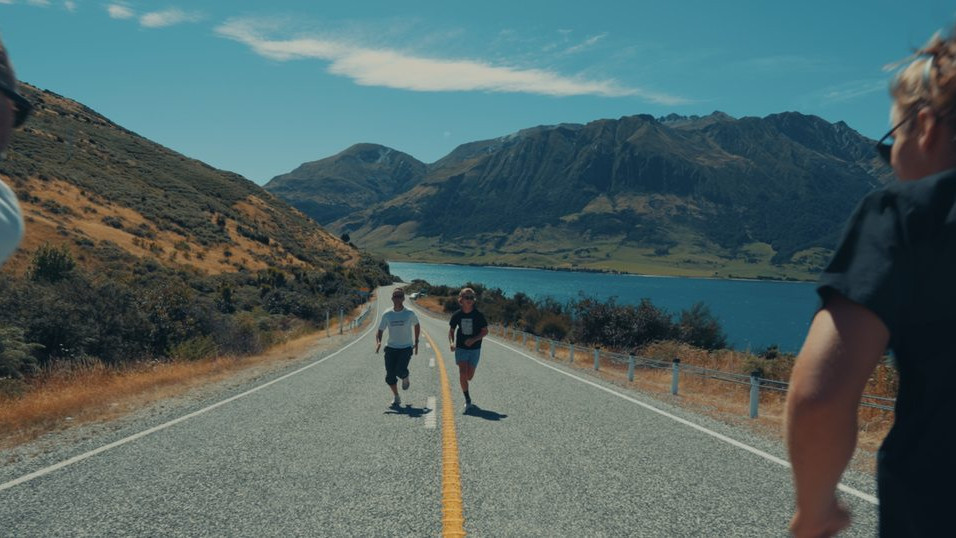
What if we treated health literacy as seriously as reading or math? When my son Aleksander turned 18, I took him to longevity clinics for MRIs, DEXA scans, and biomarker testing. And I did so because he was… perfectly healthy.
Most people still think longevity medicine is something you turn to when you’re already unwell - a niche service for the 50+ crowd. I see it differently. Longevity medicine shouldn’t be reactive healthcare for older people; it should be proactive education for the next generation - a way to understand your body early, spot risks while they’re still silent, and build habits with decades of runway ahead.
And this is exactly why I take my son into longevity clinics at 18. We visited three of them (Chi Longevity in Singapore, Human Longevity Inc. in San Francisco and Longevity Center in Warsaw) on our Quest for Longevity two years ago.
A Generational Decision
Longevity, in my view, is not a personal project about stretching one’s lifespan. It is a generational decision. If we know that most of modern medicine struggles to undo 30 or 40 years of accumulated damage - habits formed during years and reinforced since adolescence - then waiting makes little sense. On our quest we talked about it with many scientists and doctors. As Jeff Chew observed, healthcare often attempts to reverse deeply ingrained patterns that trace back to the teenage years, a period when beliefs about health, risk, and even the meaning of longevity can become remarkably persistent.
Jeff observed that adolescence is a stage of identity formation. The narratives young people adopt during this time, whether longevity is realistic or a myth, whether prevention matters, whether the body is something to understand or ignore, can stay with them for decades unless challenged by credible evidence and experience. Introducing longevity principles early increases the likelihood that those behaviors will carry into adulthood and solidify into a durable, health-oriented lifestyle.
There is also a biological argument for starting early. Dr. Vittorio Sebastiano challenged the common belief that aging begins at 40, 50, or 60, when its visible signs appear. In his view, aging is a clock that starts ticking from the first day of life, possibly even during fetal development. Early on, powerful compensatory mechanisms mask its effects. Over time, those mechanisms gradually weaken, and only then do we “notice” aging. If that is true, then intentionality about health cannot logically begin at midlife. The trajectory is already in motion long before symptoms emerge.
Psychologist Yochai Shavit made a related point in explaining why his institution calls itself a Center on Longevity rather than a Center on Aging. The focus is the entire lifespan. What happens in the womb, shortly after birth, and in the first years of life may be as important - or more important - for long-term health as what happens after 65. Longevity, from this perspective, is not an end-of-life strategy. It is a life-course strategy.
Social entrepreneur Tina Woods took it even further. She said we may need to start thinking about longevity even before birth. As she put it: “What your parents do, their lifestyle, the conditions in which they live, the choices that they make, the environments - that shows up later on in the offspring.”
Taking my son into MRI machines, DEXA scans, DNA sequencing labs, and advanced clinics around the world is simply a practical extension of that logic. If aging is continuous, if habits solidify early, and if prevention becomes exponentially harder the longer we wait, then 18 is not too early. It may already be late enough. Longevity is about giving him the awareness, data, and mindset to start shaping his trajectory while change is still easier, faster, and more powerful.
The Power of Early Measurement
Most people encounter detailed diagnostics only after a warning sign - elevated cholesterol, stubborn weight gain, chronic fatigue. Measurement becomes a reaction. At 18, measurement becomes information. A DEXA scan isn’t about correcting decline; it’s a baseline. Biomarkers aren’t red flags; they’re coordinates on a map that stretches decades into the future.
Seeing body composition data, inflammatory markers, glucose patterns, and genetic predispositions - all before anything is “wrong” - reframes health entirely. Aging stops being a distant abstraction and becomes something trackable and adjustable. Small shifts in sleep, nutrition, training, stress management, and mental resilience, made early, compound over time. Instead of waiting for symptoms, young people can see how invisible risks can exist for years beneath the surface.
Dr. David Karow said many of the diseases that eventually kill us don’t arrive suddenly. They unfold over 10 to 30 years in a prodromal state, when a person may feel fine, but the underlying biology is already shifting. He said this pre-symptomatic window is exactly where detection and intervention can make the biggest difference. Cancer, he explained, rarely appears overnight: in many cases it has been developing for five to seven years or longer, but simply isn’t caught early enough for effective action. He said the same long timeline applies to neurodegenerative diseases like Alzheimer’s, where pathological changes can begin 20 to 30 years before symptoms show up - meaning the opportunity to intervene exists, but most people miss it. And he pointed to coronary heart disease as the classic example: when someone has a heart attack at 55, the story often becomes “he seemed so healthy,” even though the warning signs were there - they just weren’t measured, recognized, or investigated.
This is also why predictive medicine is becoming one of the most important frontiers in longevity. Biologist Craig Venter argued that the goal of genomic medicine is to interpret an individual’s genome alongside their phenotype in order to better predict disease risk. As clinicians began identifying early-stage diseases in people with no symptoms, it became clear that early detection can save lives. In cancer, for example, by the time symptoms appear, the disease is often already advanced, and mortality risk increases dramatically. The absence of symptoms, in other words, does not mean the absence of disease.
For an 18-year-old, this knowledge changes the frame entirely. Health is no longer a binary state - sick or well - but a spectrum shaped by daily decisions. Sleep affects metabolic markers. Training influences insulin sensitivity. Nutrition alters inflammatory signals. Stress leaves measurable traces. When young people see how lifestyle today shapes biomarkers that predict decades ahead, prevention stops being a moral lecture and becomes a rational strategy.
As Tina Woods puts it, this thinking has to start “right from day one - or even before day one.” Young people need to see not just the risks of poor health, but the opportunity and benefits of maintaining it. Good health, she says, is “the ticket to a longer, healthier, happier life.” It gives you energy. It gives you options.
That’s the power of early measurement. It turns health from guesswork into a long-term plan - and gives you years, sometimes decades, to influence outcomes while change is still easier and options are still wide open.
From detection to intervention and delay
The next question is what you do with all the information you gather through testing and scanning and screening. Data alone doesn’t extend healthspan. And this is where longevity clinics, at least the good ones, become more than diagnostic centers. They function as prevention hubs: places designed to translate early signals into personalized interventions that can delay, and sometimes avoid, the diseases we still treat far too late. They make invisible risk visible. They shift healthcare away from late-stage crisis management and toward early-stage prevention - when lifestyle changes, targeted interventions, and careful monitoring still have real power.
Joanna Bensz from Longevity Center in Warsaw said she deliberately uses the word “clients” rather than “patients,” because the distinction matters. People come to longevity clinics not because they are acutely ill, but because they want to optimize their health and understand where they stand right now. She said the goal is to design a personalized journey - one that brings together what is already available: diagnostics, technology, supplementation, lifestyle interventions, and when appropriate, medicine - in a way that actually moves the needle.
And yet, even this is only the beginning. The clinics of today are largely about measurement, prevention, and delay. The clinics of tomorrow may be something else entirely. If the next decade delivers on the promise of gene therapies and partial epigenetic reprogramming, longevity medicine may shift from slowing aging to changing the state of our cells more directly - moving from prevention into the early era of radical life extension.
Building a Longevity Culture
This is also why we created the LiveBeyond Project. It started as a film idea, but it quickly became something bigger: a multi-generational inspiration platform built around a simple goal - making longevity culture mainstream. Not as a niche obsession, not as a luxury product, and not as a fear-driven response to aging, but as a normal part of how families think about health, energy, resilience, and joy across decades. Because if longevity stays trapped inside clinics, conferences, and private conversations, it will never become what it needs to be: a shared social shift.
If longevity stays trapped inside clinics, conferences, and private conversations, it will never become what it needs to be: a shared social shift. Prevention is a generational advantage: the earlier you understand your baseline, your risks, and your levers for change, the more time you have to shape outcomes. The sooner we normalize that - as naturally as we normalize education, sport, or career planning - the healthier, longer, and more capable we all become.
Marek Piotrowski, Longevity Advocate ↗
The film and the book are coming in 2026 — the story behind this journey.
The Film · The Book · More articles →
Written by Marek Piotrowski. If you would like the Longevity Map that sits behind all of this, it is free — ask for it here.
Get the Map. It is free, and it is the whole field on one page.
The Longevity Map will guide you to a longer, healthier and more fulfilling life. It gives you a helicopter view on all branches of the longevity field.