
A second chance on ice? What I saw inside a cryonics facility
In Arizona, my son and I walked among tanks kept at minus 196 degrees. What cryonics really is, what it costs, and why the best plan is never needing it.
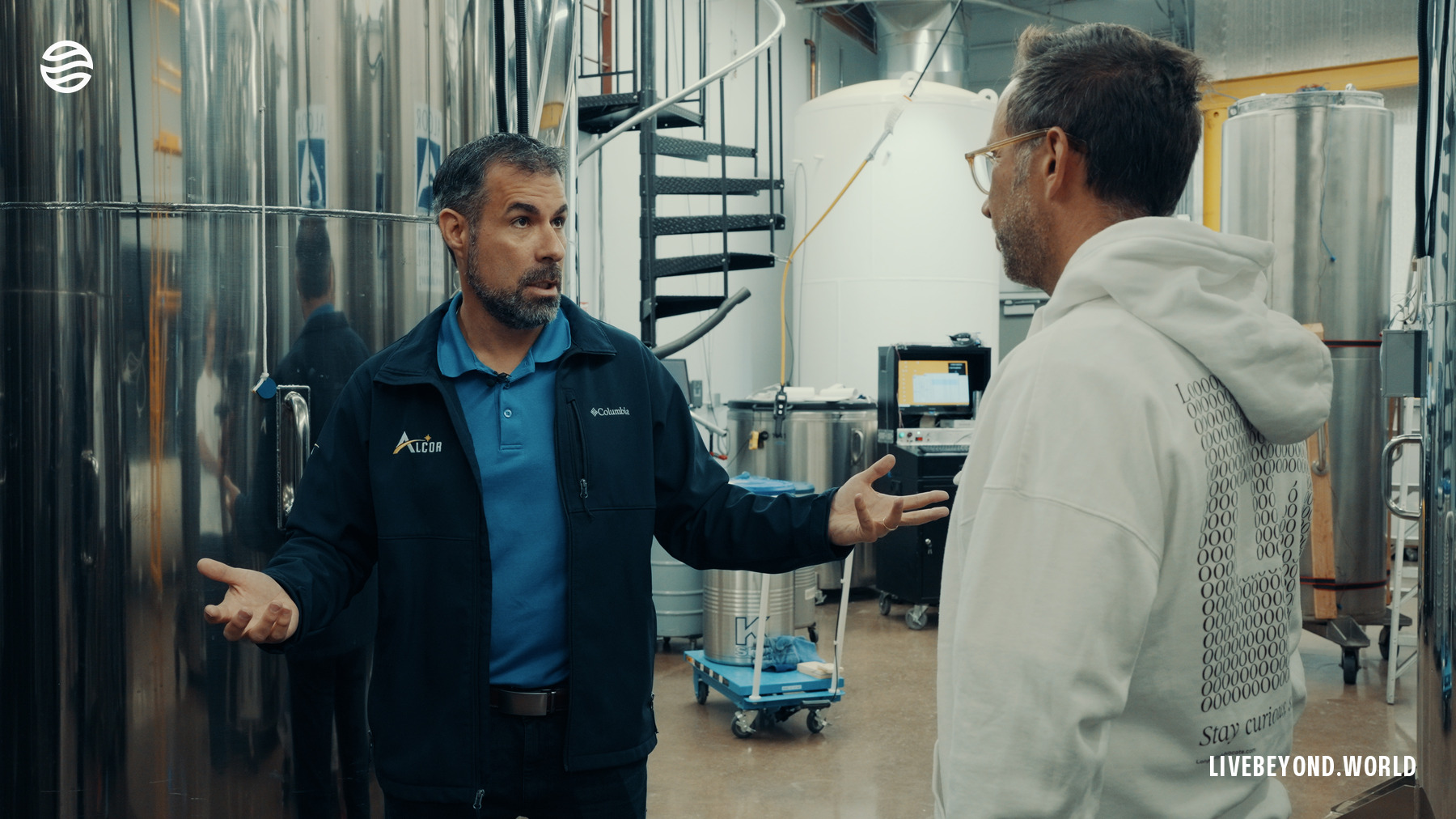
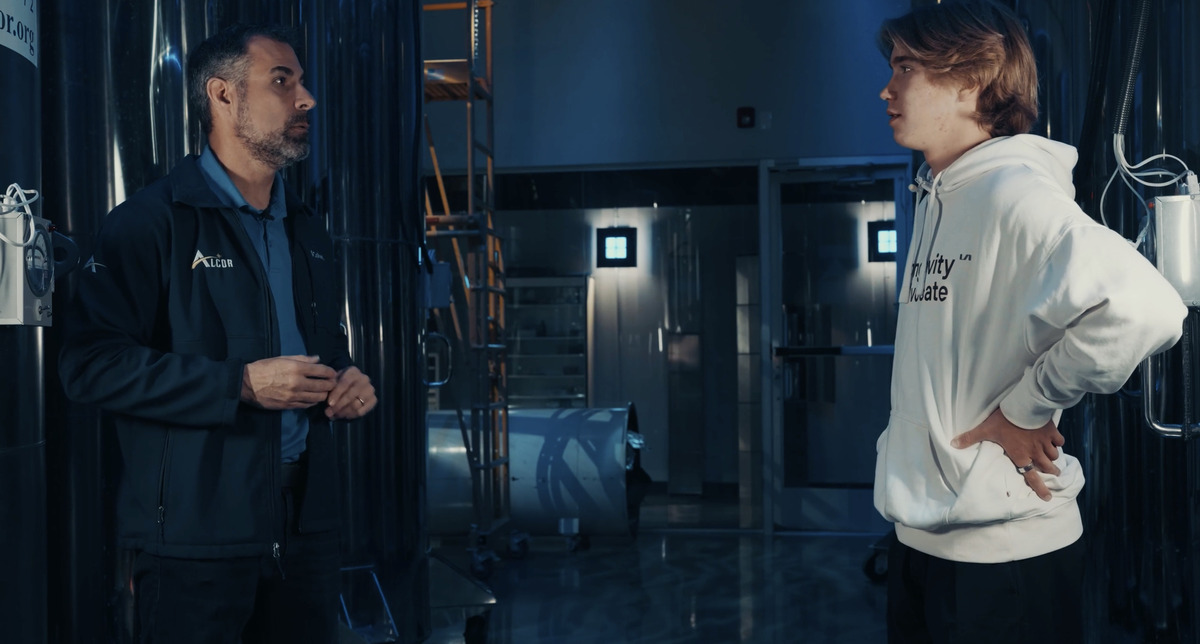
Some afternoons change how you look at life. One of mine was in Scottsdale, Arizona, in April 2024. Outside, the desert heat. Inside, tall steel tanks under blue light, keeping people at minus 196 degrees, waiting.
This was Alcor, the cryonics organization that Max More once led. My son Alek and I came with a camera and many questions. I left with one image I can’t let go of: on one of the tanks, the photo of a girl who was only two. Her parents wanted her to have a chance at another life.
We owed the visit to Max himself. We met him in Dublin, on the very first stop of our quest, and he has been signed up for cryonics since he was 22. And yet the thing he said that stayed with me most was this:
My goal is certainly not to die in the first place. That’s number one priority. … Nobody wants to die. Nobody wants to be in a tank of liquid nitrogen either.
That is how the whole field felt to me. Nobody there dreams of the tank. They want a backup plan for the day today’s medicine runs out of answers.
So how does it work? A trained team stays close to a member who is dying, and starts only once the person has died. First they cool the body as fast as they can. Then they replace the blood with a solution that turns the tissue into something like glass, so no ice crystals can tear the cells. Last comes a huge steel thermos filled with liquid nitrogen. It looked less like a film set and more like an emergency room.
The part that gave me real hope has nothing to do with waking anyone up. Cold already creates life today: children grow from embryos that waited in liquid nitrogen, and kidneys kept in deep cold have been transplanted and worked. James Arrowood, who showed us around Alcor, told us where it could lead:
If you pass away, if we could preserve those, right now they only live for six to ten hours. … There’s no reason it couldn’t scientifically preserve those for weeks, and if you preserve them for weeks, you can do perfect matches. So your kidneys could save two people’s lives, and they could have perfect matches that don’t get rejected.
Picture an organ that can wait weeks for exactly the right person. That would change transplants for all of us, long before anyone is ever revived.
Still, nobody we met sold us a promise. No person and no large animal has ever been brought back. At Harvard, Allison Duettmann put it plainly:
Current cryopreservation techniques are not good enough that we can actually be recovered.
And yet, when it came to her own family, she chose the lifeboat:
Yes, it’s a lifeboat. I signed up my dad to cryonics once I could. … I think none of the options that we currently have available are really great, so we need a lot of more research into better vitrification methods.
It isn’t only for millionaires, either. Most members pay with life insurance, and for a young, healthy person that can be a few dozen dollars a month.
Plan A is to stay healthy. Cryonics is only plan B.
That is my view too. My first plan is to stay healthy and young in this body for as long as I can, and enjoy every single day. Even Max hopes his tank will stay empty:
Hopefully it’ll save me. I won’t have to be cryopreserved. Maybe we can defeat aging before I get too old, and certainly in time for you.
Next year you’ll see Alcor in our film, “Live Beyond. Father and Son on a Quest for Longevity”. Now my question for you: would you take a lifeboat like this, for yourself or for someone you love? Just tell me yes or no.
Answers on this topic
Cryonics: a lifeboat, not a promise →
Longevity escape velocity: can science outrun aging? →
The whole story, with James, Max, Dominika Wilczok, the Walt Disney legend and the science of cold, is waiting for you on the Live Beyond Hub:
The full article on the Live Beyond Hub
My son and I saw the lifeboat we hope we’ll never need
13-minute read · 8 photographs · 4× longer than this page
Written by Marek Piotrowski. If you would like the Longevity Map that sits behind all of this, it is yours, with its Guide: ask for it here.
Get the Map and its Guide. The whole field on one page, and the stories behind it.
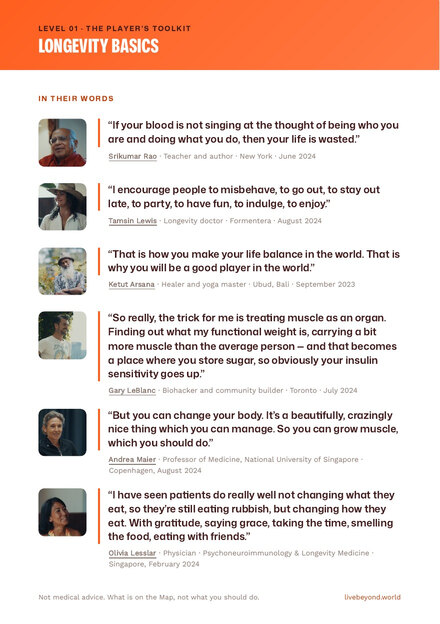
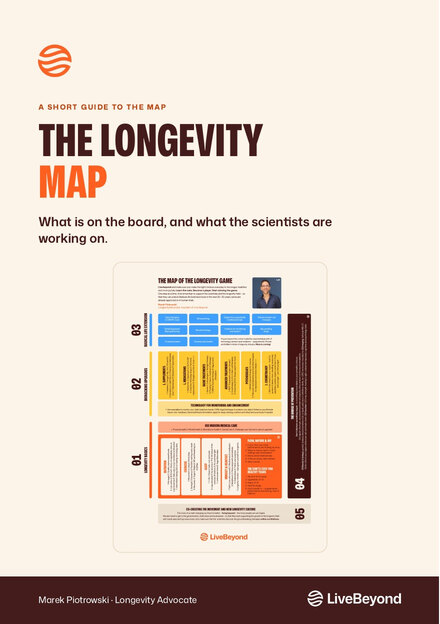
The Longevity Map will guide you to a longer, healthier and more fulfilling life. It gives you a helicopter view on all branches of the longevity field.